What this symptom may mean
A completely silent system tells a different story than one that runs poorly. Either power is not reaching the equipment, the thermostat is not sending a signal, or a safety device has shut things down on purpose.
Work from the thermostat outward. Plenty of no-start calls end with fresh batteries or a flipped switch. If the basics are fine, the next steps belong to a professional.
Possible causes
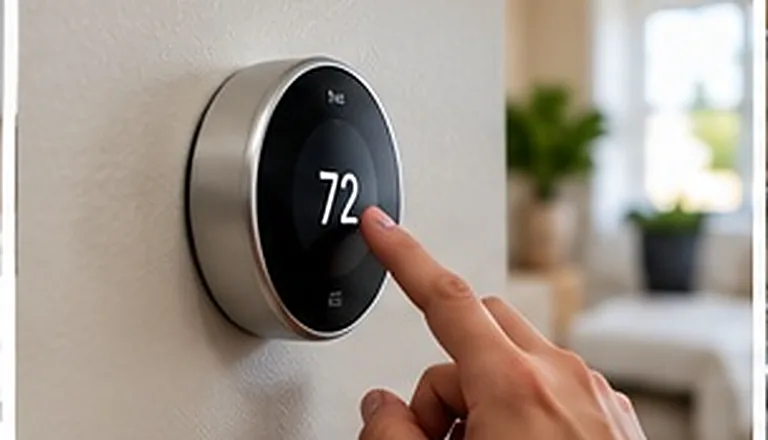
Thermostat batteries or settings
A blank screen, a schedule override or a mode change can stop the call for cooling before it reaches the equipment.
Tripped breaker
Storms, surges or a failing part can trip the AC or air handler breaker.
Service switch turned off
Indoor units often have a switch nearby that looks just like an ordinary light switch.
Condensate safety shutoff
A float switch in a full drain pan cuts power to protect the home from water damage.
Failed electrical component
A bad capacitor, contactor, transformer or control board can leave the system unable to start.
Safe checks you can make
- Replace thermostat batteries, then confirm the mode is COOL and the setpoint is below room temperature.
- Check the main panel for tripped breakers labeled AC, condenser, furnace or air handler, and reset a tripped one once.
- Find the service switch near the indoor unit and make sure it is on.
- Look at the condensate line and any visible pan for standing water that may have triggered a shutoff.
What not to do
- Don't reset a tripping breaker more than once. It is protecting the wiring from a real fault.
- Don't open the electrical panel cover or the outdoor unit's service panel to look for loose wires.
- Don't touch or try to test a capacitor.
- Don't jump wires at the thermostat to force the system on.
When professional evaluation may be appropriate
If the thermostat has power, breakers and switches are on, the pan is dry, and the system still will not start, it is time to call. A technician can trace power through the system with proper meters and safety gear.
Call to be connected with a local provider for outdoor unit repair or general AC repair. If the thermostat itself seems at fault, see thermostat service.
- The breaker trips again right after a reset
- The thermostat works but the equipment never responds
- A burning smell or scorch marks near the equipment
What an HVAC provider may inspect
- Line and low voltage at each component
- Transformer, fuses and control board
- Capacitor and contactor
- Compressor windings and start circuit
Keeping it from happening again
Swap thermostat batteries once a year, label the AC breakers clearly, and keep the drain line flowing. Spring and summer thunderstorms are common in central Alabama, so ask a provider to look over electrical parts after a season with frequent outages.
