In short
Refrigerant leak repair means locating where refrigerant is escaping from an AC or heat pump, fixing that spot, and then restoring the correct charge. It is for homeowners whose system blows warmer air, freezes up, or keeps losing cooling after a recharge.
A central air system is a sealed loop. Refrigerant circulates between the indoor coil and the outdoor unit, and under normal conditions the amount never changes. A low charge almost always means a leak, even a tiny one.
Adding refrigerant without finding the leak is a short-term patch. Call to be connected with a local HVAC provider who can test the system.
Signs your AC may be low on refrigerant
- Vents blow air that feels cool but not cold on hot afternoons.
- Frost or ice forms on the copper line near the outdoor unit.
- The system runs for long stretches without reaching the setting.
- A faint hissing or bubbling sound comes from the equipment.
- A previous recharge helped for a while, then cooling faded again.
What leak repair and recharge may involve

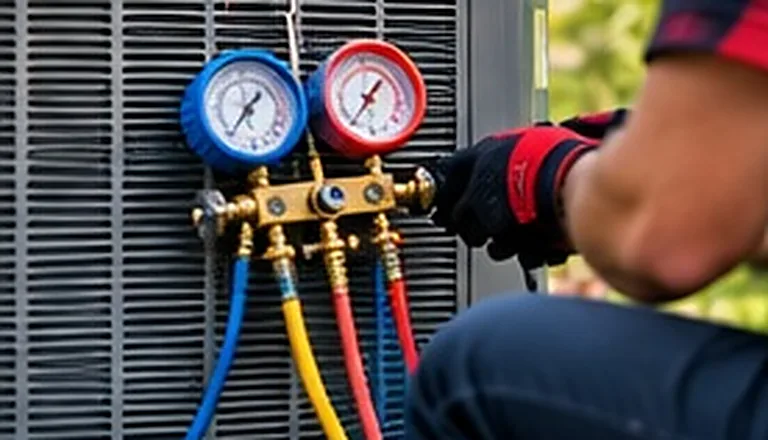
The technician usually measures pressures and temperatures first, since airflow problems can mimic a low charge. If refrigerant is missing, leak detection follows at coils, valves and joints.
Some leaks, like a loose service valve or cracked flare fitting, can be repaired. Corrosion spread across a coil may mean replacing that part. Afterward the system is typically evacuated and recharged to specification. Refrigerant work is regulated and should be left to a qualified provider.
Safe checks before you call
- Replace a dirty filter, since restricted airflow can cause icing that resembles a refrigerant problem.
- Open supply vents and clear return grilles blocked by furniture or rugs.
- If you see ice, set the thermostat to off and run the fan only so the coil can thaw.
When professional help makes sense
Please skip the DIY recharge kits sold on store shelves. They can overcharge the system, introduce sealants that clog components, and leave the actual leak in place.
The page on an AC blowing warm air may help you describe the symptoms. If the coil has iced over, AC freezing up explains why thawing matters.
What a provider may test
- Operating pressures, superheat and subcooling
- Indoor coil for corrosion or oily spots
- Outdoor coil and brazed joints
- Service valves, caps and flare connections
- Airflow and filter condition, to rule out look-alikes
When a leak points toward replacement
A single accessible leak in an otherwise healthy system is usually worth repairing. Repeated leaks, widespread coil corrosion, or an older refrigerant type being phased out change the math.
Ask where the leak was found and how likely more leaks are. Those answers, plus the system's age, help decide between repair and replacing the AC.
Refrigerant leaks and long Alabama summers
Systems in the Montgomery, AL area run for many months each year, so a small leak that might go unnoticed elsewhere shows up quickly here. High humidity also means a weak charge can leave the house feeling sticky well before it feels warm.
Homeowners call about AC refrigerant leak & recharge from towns including:
- HVAC repair in Montgomery, AL
- HVAC repair in Prattville, AL
- HVAC repair in Hope Hull, AL
- HVAC repair in Tallassee, AL
Browse by area: Montgomery County Elmore County Lake Martin Area Macon County East Alabama.